Why Ethen Uses Specialized Interfaces Instead of One Universal UI
When people compare specialized AI interfaces vs chat, the honest answer is that chat is an excellent interface for conversation and a poor one for most other kinds of work. Creating an image series, changing code in a repository, running an investigation over weeks, delegating a job that runs while you are away and letting an agent act on a computer each need different things on screen. They differ in what you are looking at, how long the work takes, how you judge progress, how much is at risk and which media are involved. Ethen therefore gives each kind of work an interaction model shaped for it — a thread for conversation, a canvas for creation, a workspace with evidence for code, a research workspace for investigation, a job view for delegated work, and a session with bound approvals for action — and connects them with a shared identity: one account, shared memory and permission controls, a common vocabulary for status and evidence, hand-offs that carry context, and one design language.
When people compare specialized AI interfaces vs chat, the honest answer is that chat is an excellent interface for conversation and a poor one for most other kinds of work. Creating an image series, changing code in a repository, running an investigation over weeks, delegating a job that runs while you are away and letting an agent act on a computer each need different things on screen. They differ in what you are looking at, how long the work takes, how you judge progress, how much is at risk and which media are involved. Ethen therefore gives each kind of work an interaction model shaped for it — a thread for conversation, a canvas for creation, a workspace with evidence for code, a research workspace for investigation, a job view for delegated work, and a session with bound approvals for action — and connects them with a shared identity: one account, shared memory and permission controls, a common vocabulary for status and evidence, hand-offs that carry context, and one design language.
Key takeaways
- Chat is not universal. It is the right interface for conversation, and a front door to everything else.
- Five things change what belongs on screen. Object of attention, time scale, feedback loop, risk and modality.
- Each kind of work gets its own interaction model. Thread, canvas, workspace, research workspace, job view, action session.
- Modality matters. Voice cannot show a table; video needs a timeline; images need comparison.
- Specialization needs connection. Shared identity, controls, vocabulary, hand-offs and design keep it one product.
- The cost is switching. Hand-offs that carry context are how we try to keep that cost low.
Is chat a universal interface for AI?
Chat is not a universal interface, though it is a remarkable one. It needs no training, accepts almost any request, and works for questions, drafting, brainstorming and explanation. Jakob Nielsen has described generative AI as introducing a new interface paradigm, "intent-based outcome specification," in which people state the outcome they want rather than the steps to get there (Nielsen, 2023). Chat is the most natural way to state intent.
The problem is what happens after the intent is stated. When the outcome is an answer, the next reply is the result, and chat works. When the outcome is an artifact, a code change, a body of evidence, an hour of delegated work or a change in some other system, the person needs to inspect, compare, approve, correct and come back to it. A scrolling thread is a weak place to do those things. The outcome gets buried between messages, its state is implicit, and the history of how it was produced is spread across a conversation.
That is the design argument behind Ethen's family of apps. The company and product-organization argument is in Why Ethen Is a Family of Specialized AI Apps, Not One App; this article is about the interfaces themselves.
Five things that change what belongs on screen
Five properties of a kind of work determine what its interface needs.
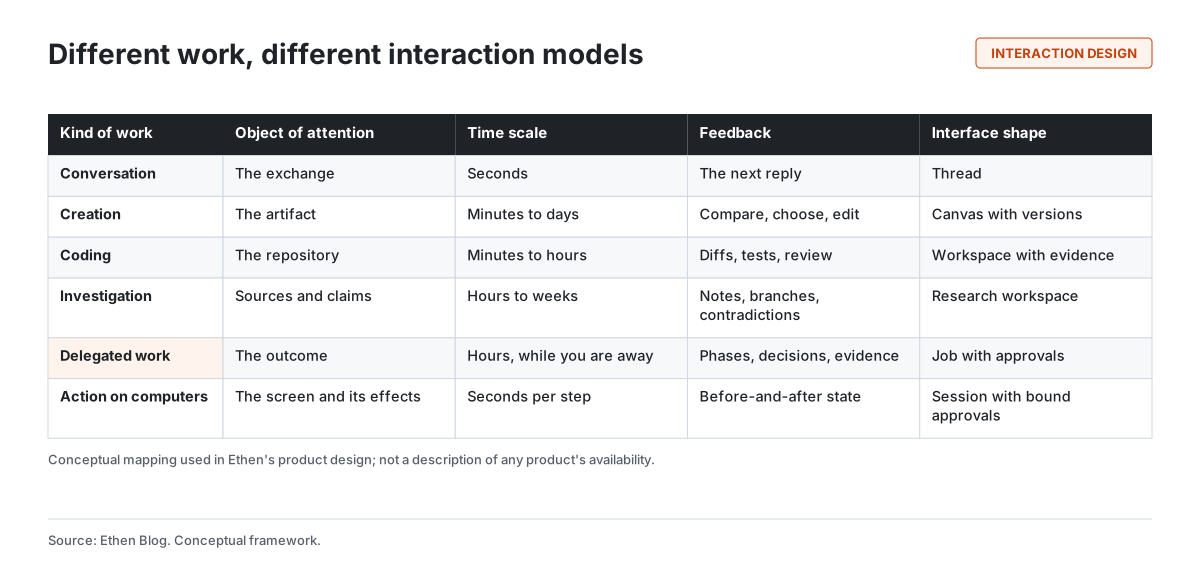
Object of attention. In conversation, you attend to the exchange. In creation, to the artifact. In coding, to the repository and the change. In delegated work, to the outcome. The interface should put the object of attention at its center; a thread puts the exchange at the center whether or not that is what matters.
Time scale. Seconds, minutes, hours or weeks. Work measured in seconds can be watched. Work measured in hours cannot, and needs progress shown as phases and decisions that reach you at the right moment; we explain why in Why Long-Running AI Work Needs a Different UX Than Chat.
Feedback loop. How you judge whether the work is going well: reading a reply, comparing options side by side, reading a diff and test results, weighing sources against each other, checking evidence of an outcome.
Risk. What happens if the work is wrong. A wrong answer can be ignored. A wrong action in another system may not be reversible.
Modality. Text, images, video, audio and speech each need different presentation and different controls.
Figure 1 maps six kinds of work against these properties.
Six interaction models
Conversation: a thread
For questions, drafting and exploration, a thread is right. It is fast, forgiving and familiar. Ethen Chat is designed to stay deliberately focused on this, with lightweight entry points into deeper work and hand-offs to the app that owns it; see Keeping Ethen Chat Focused. Keeping Chat focused is what keeps it fast.
Creation: a canvas with versions
Creative work is about the artifact, and judging it means comparing. A creative interface needs the artifact at the center, several options side by side, a way to keep what works and change what does not, references that persist, and a history of versions. A thread hides all of that between messages. Ethen Studio is moving toward workflows that carry the brief, references and choices from step to step; see Why Ethen Studio Is Becoming More Workflow-Oriented. Designer applies the same idea to design-to-build work.
Coding: a workspace with evidence
A code change lives in a repository and is judged by its diff, its tests and its review. The interface needs files, branches, a terminal, test results and an evidence summary of what was run and what was not. Ethen Code is one system offered at three depths — conversational help in Chat, a full cloud workspace and a local environment — because the depth of the task decides how much interface it needs.
Investigation: a research workspace
An investigation accumulates sources, claims, contradictions and open questions over days or weeks. It needs a place where those persist and can be organized, branched and revisited. This is the kind of work our definition of an AI workspace was written for: a persistent place holding context, artifacts, state, permissions, people and evidence. See What Is an AI Workspace?.
Delegated work: a job view
When you hand off a goal and do something else, the interface's job is to tell you what happened while you were away. It needs a job with its own identity, progress shown in phases, decisions routed to you with the context to answer them, and a result delivered with evidence. Ethen Founder is built around this unit of work; see Why Ethen Founder Is About Outcomes, Not More Chat.
Action on computers: a session with bound approvals
When an agent operates a browser or desktop, the object of attention is the screen and the effect of each action on it. The interface needs to show what the agent sees, what it proposes to do, and the state before and after, with approvals bound to specific actions rather than to "keep going." We discuss the concept in Computer Use Is More Than Clicking Buttons.
Why modality changes interface needs
Modality is a separate axis from the kind of work, and it changes interfaces just as much.
Speech is fast and hands-free but linear and fleeting. A spoken answer cannot show a table, and a spoken confirmation of an action needs to be precise. Voice works well as a way into a task and a way to steer it; durable work and detailed results still need a visual surface. We describe how voice fits Ethen in How Voice Fits Into Ethen.
Images are judged by comparison. An image interface needs side-by-side options, references and the ability to edit part of an image while keeping the rest.
Video has time. It needs a timeline, frames to inspect and a way to change one segment without regenerating everything.
Audio and music need playback, waveforms and versions to compare by ear.
A universal interface must either treat all of these as attachments in a thread, which makes them hard to judge, or grow a mode for each, which turns one interface into many interfaces sharing a frame. Ethen chooses to build the specialized versions deliberately.
How we decide where a capability belongs
When a new capability is proposed, we ask a short sequence of questions about the work it serves. Figure 2 shows them.
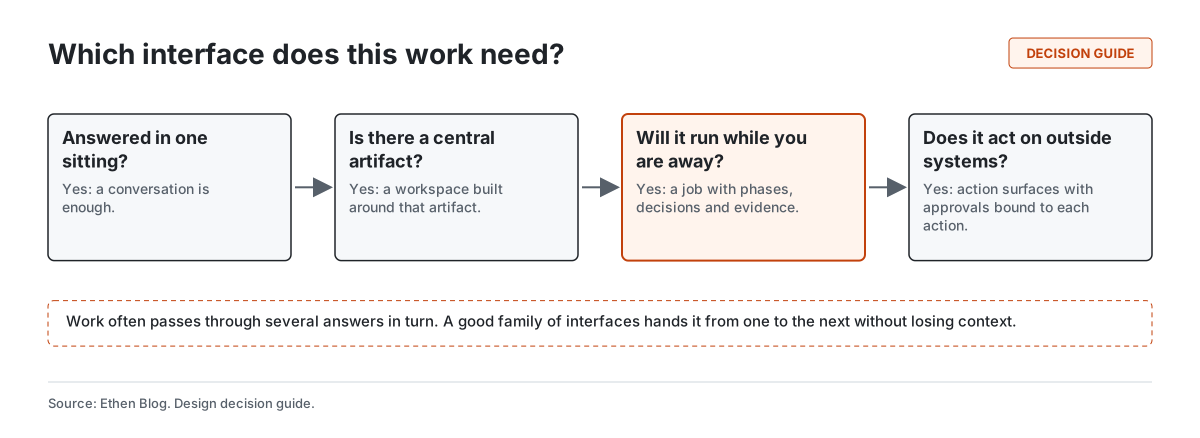
Can it be answered in one sitting? If so, a conversation is enough. Is there a central artifact? Then it needs a workspace built around that artifact. Will it run while the person is away? Then it needs a job with phases, decisions and evidence. Does it act on outside systems? Then it needs approvals bound to each consequential action.
Work often passes through several answers in turn: a question becomes an artifact, the artifact becomes a recurring job, the job needs to act on a system. A good family of interfaces hands the work from one to the next without losing context. We explain why we would rather send work to the right surface than add a mode to the current one in Why We're Choosing Depth Over Feature Count.
What keeps it feeling like one Ethen
Specialized interfaces carry a real risk: fragmentation. A family of apps that do not share anything feels like a bundle of unrelated tools. Figure 3 shows what we share across every interface.
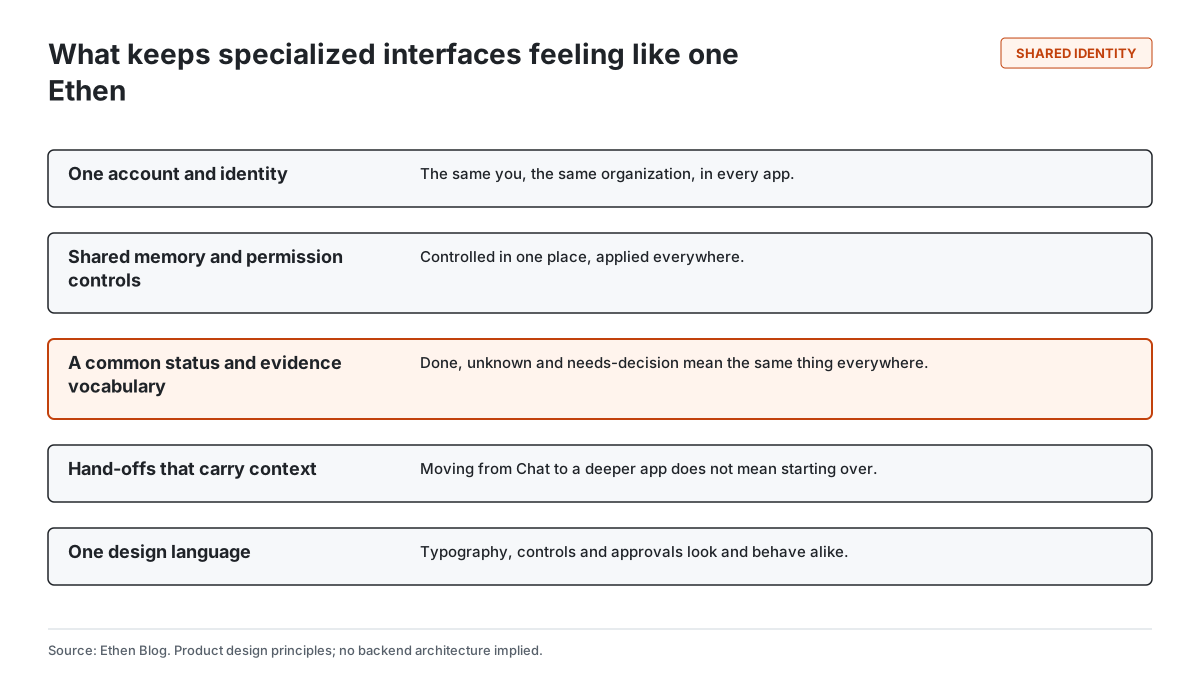
One account and identity. The same person and organization in every app.
Shared memory and permission controls. What Ethen remembers, and what it may access, are controlled in one place and apply everywhere.
A common vocabulary for status and evidence. "Done," "unknown" and "needs your decision" mean the same thing in Code, Studio, Research and Founder. This is the layer we consider most important, because it lets people trust what they see in an app they use rarely.
Hand-offs that carry context. Moving from Chat to a deeper app should not mean re-explaining the task.
One design language. Typography, controls and approvals look and behave alike. We describe the principles in The Principles Behind Ethen's Product Design.
Human-computer interaction research has long argued that people work best with systems whose objects and actions are visible and whose effects are predictable (Shneiderman, 1983), and that AI systems should make clear what they can do and how well (Amershi et al., 2019). A shared vocabulary across specialized interfaces is how those properties survive the move between apps.
The strongest arguments for one universal interface
The case for one interface is serious, and we take it seriously.
One place is simpler to learn. True. That is why Chat is Ethen's front door, and why lighter versions of deeper capabilities start there.
Switching has a cost. Also true. Every hand-off risks losing context or attention. Our answer is to make hand-offs carry context, and to only ask people to switch when the work genuinely needs a different surface.
Models can generate interfaces on demand. Increasingly, AI systems can render tables, forms and previews inside a conversation. This helps, and we expect conversation to get richer. But a generated widget inside a thread still lacks persistence, history, shared state and the evidence of what happened — the things that make a workspace a workspace. Eric Horvitz's 1999 principles of mixed-initiative interfaces emphasized considering the cost of interrupting people and maintaining working memory of recent interactions; durable work needs a durable place.
An example: one goal, several interfaces
The following example is illustrative and describes direction rather than current availability.
A developer asks in Chat why a page on their site loads slowly. Chat explains the likely causes. They decide to fix it, and the work moves to Code, where the repository, the change and the test results sit together with an evidence summary. They want to confirm the fix in a real browser, so a computer-use session runs the page, showing each step and the before-and-after timings, with no action outside the test environment permitted without approval. Finally, they ask for a weekly check that reports if the page slows down again: a delegated job, with its own view, that tells them what it measured each week and asks before opening any ticket. Four interfaces, one identity, one vocabulary for status, and no step where they had to explain the problem again.
Tradeoffs and limitations
More surfaces means more to build and maintain. Each specialized interface is a long-term commitment. We accept that cost for kinds of work that clearly need it, and push back on new surfaces that do not.
Boundaries are not always clean. Some work sits between interfaces. We resolve those cases by giving each capability one owner and letting other surfaces hand off to it.
Hand-offs are still imperfect. Carrying context across apps is hard, and not every hand-off described here exists in its finished form today.
Conversation will keep getting richer. Some work that needs a specialized interface today may fit inside conversation later. We expect the boundaries to move and will move them when the evidence says so.
FAQ
Is chat the right interface for every AI task? No. Chat is right for conversation. Creation, coding, investigation, delegated long-running work and action on computers each need interfaces shaped around their object of attention, time scale, feedback and risk.
Why do AI products need different interfaces? Because different kinds of work differ in what you are looking at, how long it takes, how you judge it, how much is at risk and which media are involved. One screen cannot serve all of those well.
What comes after the chat interface? Not a replacement but a family: conversation as the front door, with workspaces, canvases, job views and action sessions for the work that outgrows a thread.
How does Ethen keep specialized apps from feeling fragmented? With one account, shared memory and permission controls, a common status and evidence vocabulary, hand-offs that carry context, and one design language.
Does this mean Ethen Chat is limited? Chat is deliberately focused. It starts most work and hands deeper work to the app that owns it.
Related reading
- Why Ethen Is a Family of Specialized AI Apps, Not One App
- What Is an AI Workspace? A Better Way to Think About It
- Why Long-Running AI Work Needs a Different UX Than Chat
- How Upcube Is Organizing Ethen Across Specialized Apps
References
- Nielsen, J. (2023). AI: First New UI Paradigm in 60 Years. Nielsen Norman Group. https://www.nngroup.com/articles/ai-paradigm/
- Shneiderman, B. (1983). Direct Manipulation: A Step Beyond Programming Languages. Computer, 16(8), 57–69. https://doi.org/10.1109/MC.1983.1654471
- Amershi, S., et al. (2019). Guidelines for Human-AI Interaction. Proceedings of CHI 2019. https://doi.org/10.1145/3290605.3300233
- Horvitz, E. (1999). Principles of Mixed-Initiative User Interfaces. Proceedings of CHI 1999, 159–166. https://doi.org/10.1145/302979.303030